High Oil Price Relief Payment: Korea Checklist
핵심 요약
High Oil Price Relief Payment applications in South Korea began on April 27, 2026. Check eligibility, weekday application rules, payment methods, usage limits, and fraud warnings before applying.
검증 정보
- 데이터 기준일 2026. 04. 28 작성 기준
- 최종 업데이트 2026. 04. 28
- 참고 기준 본문의 공식 자료, 공개 통계, 서비스 안내 기준
- 면책 고지 정보 제공 목적이며 금융·의료·법률 판단은 개인 상황에 따라 달라질 수 있습니다.
High Oil Price Relief Payment applications in South Korea began on April 27, 2026. Many households are now checking whether they qualify, which day they can apply, which payment method to choose, and where the support money can be used. This article turns the government notice into a practical first-week checklist.
The important point is that the High Oil Price Relief Payment is not just a headline about energy prices. It is a cost-of-living policy that connects fuel prices, logistics costs, food prices, and vulnerable household budgets. For readers outside Korea, the program also shows how quickly energy-price pressure can become a political and household-finance issue in South Korea.
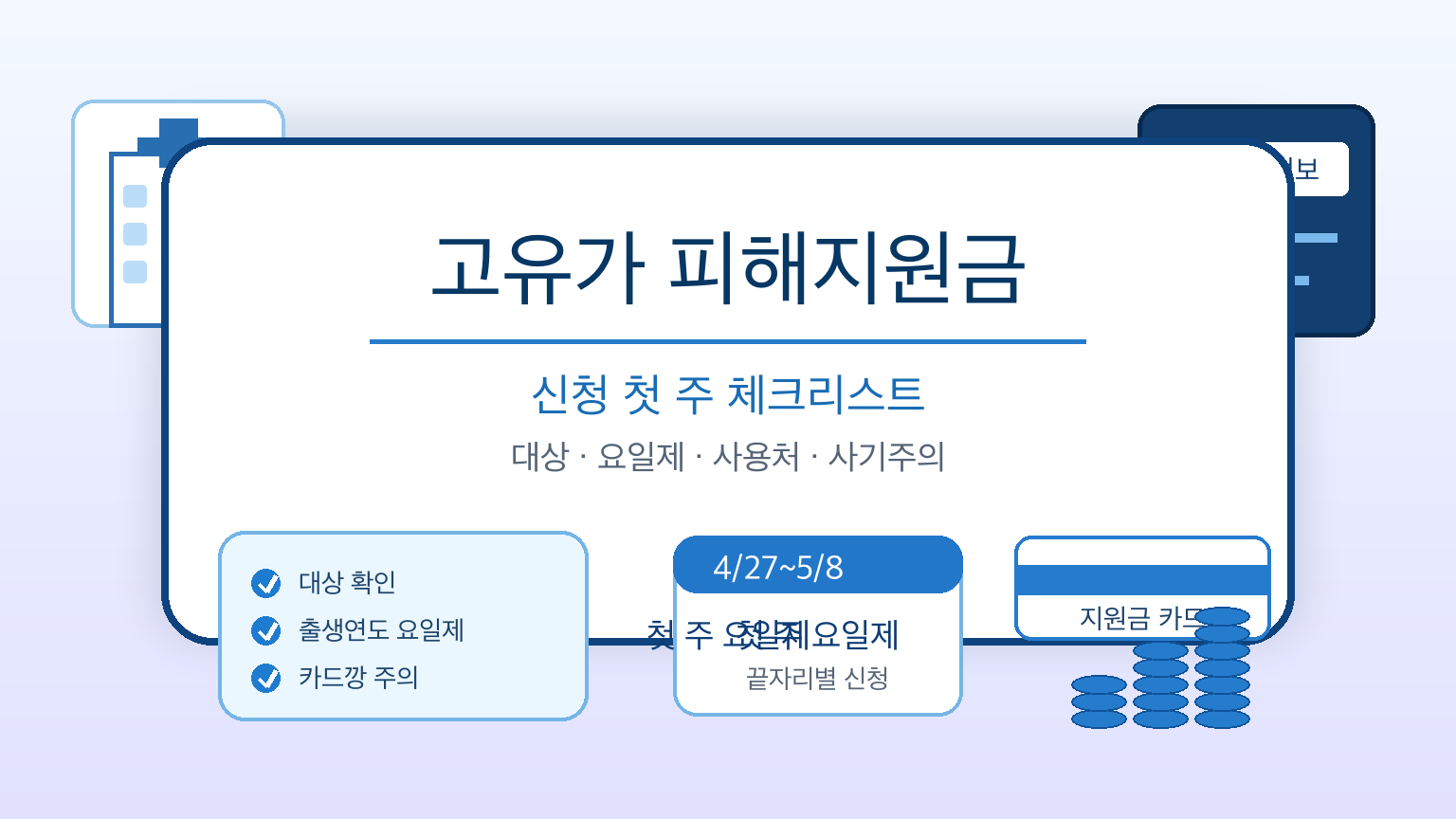
High Oil Price Relief Payment: quick answer for applicants
The first round of the High Oil Price Relief Payment started at 9 a.m. on Monday, April 27, 2026. The application window runs until 6 p.m. on May 8. Online applications are generally available throughout the period, but the final-day deadline should be treated as 6 p.m. Offline applications usually follow weekday office hours.
For the first week, the application schedule is divided by the last digit of the applicant’s birth year. This weekday rule is designed to reduce crowding and prevent online systems and local offices from being overwhelmed. Applicants should check the birth-year rule before trying to apply.
High Oil Price Relief Payment eligibility: who can apply first?
The first round of the High Oil Price Relief Payment is focused on three groups: basic livelihood security recipients, near-poverty groups, and single-parent family support recipients. According to the announced guidance, basic livelihood security recipients receive 550,000 won per person. Near-poverty groups and single-parent family recipients receive 450,000 won per person.
Residents outside the Seoul metropolitan area and residents of population-decline regions may receive an additional 50,000 won per person. This means the final amount can differ depending on income-support status and place of residence. Applicants should therefore check both their welfare-status category and their local-government guidance.
Some broader policy discussions mention a wider national payment plan, but the April 27 application should be understood as the first round for vulnerable groups. A household should not assume eligibility simply because it saw a general headline about a larger support program.
High Oil Price Relief Payment weekday application rule
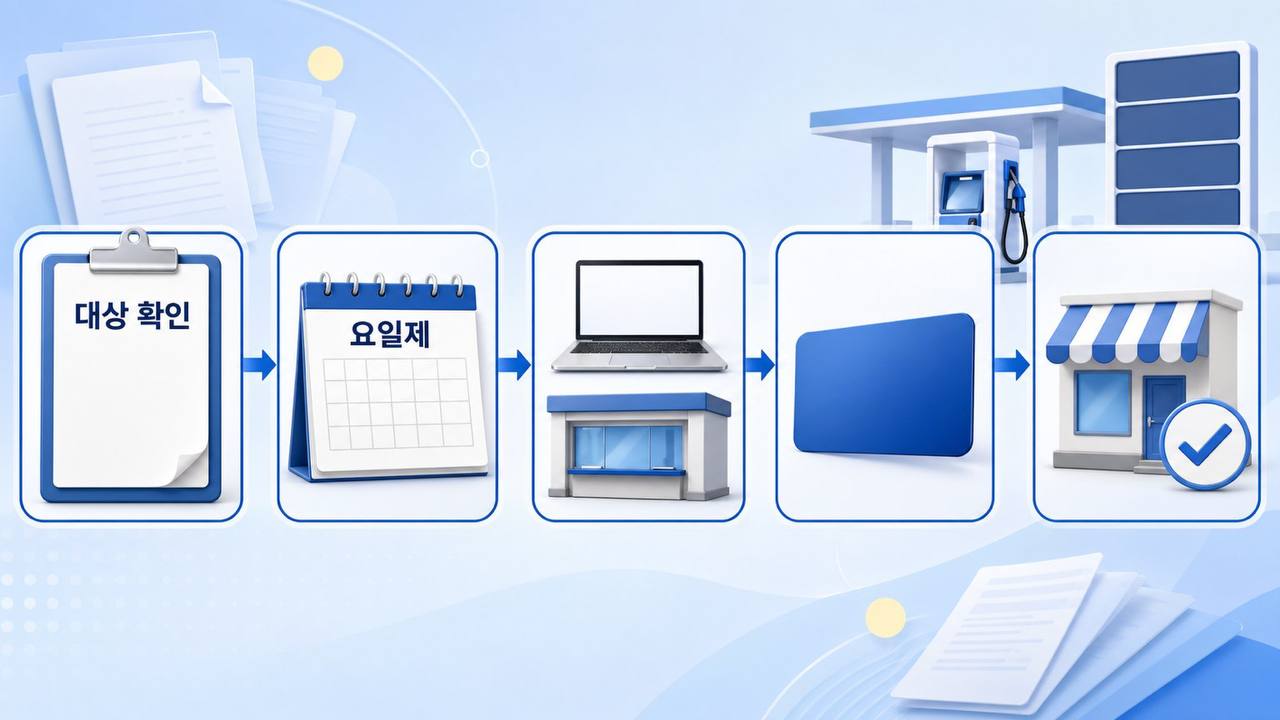
From April 27 to April 30, the High Oil Price Relief Payment uses a weekday application rule based on the last digit of the applicant’s birth year. The rule applies to both online and offline applications. Some offline centers may adjust operations depending on local conditions, so in-person applicants should check local notices first.
- Monday, April 27: birth year ending in 1 or 6
- Tuesday, April 28: birth year ending in 2 or 7
- Wednesday, April 29: birth year ending in 3 or 8
- Thursday, April 30: birth year ending in 4, 9, 5 or 0
- Friday, May 1: weekday restriction lifted
The April 30 rule is easy to misunderstand because it includes birth years ending in 5 and 0 as well as 4 and 9. From May 1, the weekday restriction is scheduled to be lifted. The safest approach is to check the last digit of the birth year first, then apply through the official channel.
Payment methods and usage deadline
The High Oil Price Relief Payment can be received through credit or debit card points, prepaid cards, or local love gift certificates. The usage deadline is August 31, 2026. A household that receives the payment should plan where and when to use it before the deadline.
Usage rules differ by payment method. Local gift certificates are mainly accepted at registered local merchants. Credit card, debit card, and prepaid card payments are generally available at eligible small businesses, while certain sectors such as entertainment and gambling-related businesses are restricted. Some local exceptions can apply, including selected rural retail outlets and public-interest stores.
Because the merchant list can differ by city, county, and district, applicants should not rely only on a general rule. They should check the local-government page or the payment-method provider before spending the support money.
Official source and documents to check
Before applying for the High Oil Price Relief Payment, applicants should check the latest notice from the Ministry of the Interior and Safety and their local government. The central-government notice explains the national framework, but local pages may contain branch hours, offline-center locations, and merchant-list details.
Applicants should prepare identity verification information and check whether they need to apply online, at a community service center, or through a bank branch. Bank applications may close earlier than government-office applications, so afternoon visits require extra caution.
Fraud warnings: cash conversion and card-cashout schemes
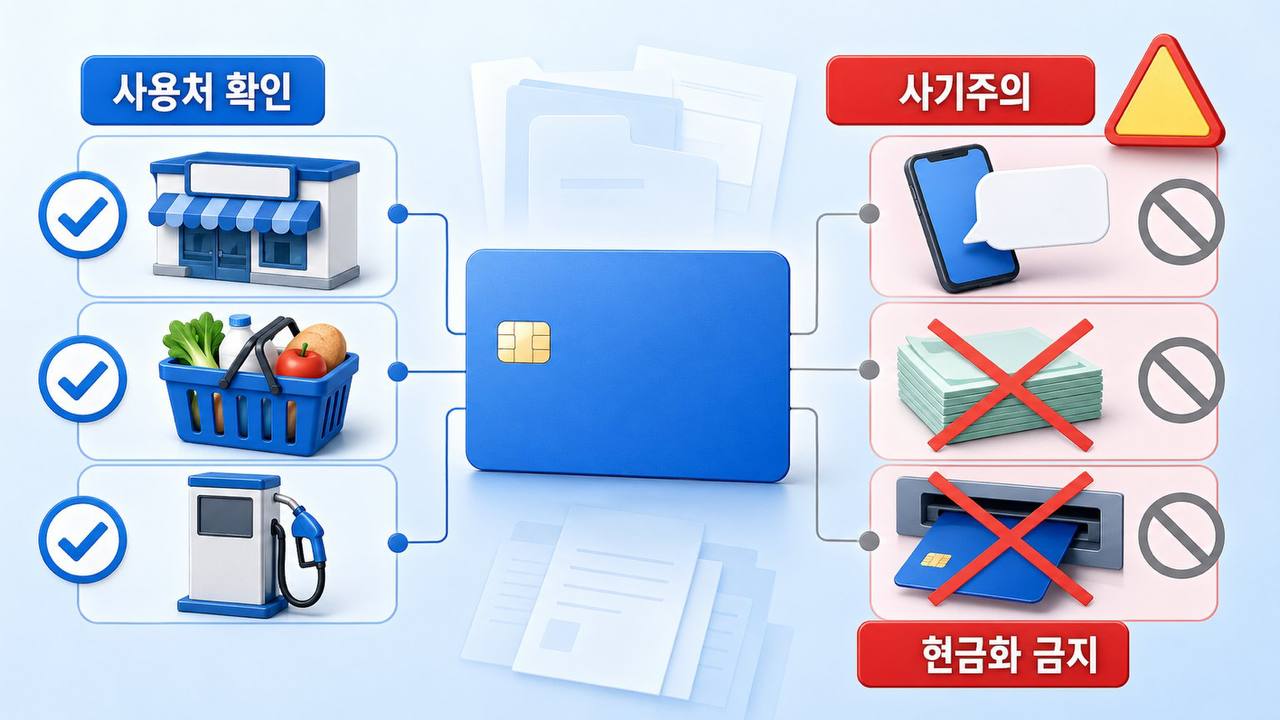
Public payment programs often attract fraud attempts. Applicants should be careful with text messages, unofficial application links, proxy-application offers, discounted resale of payment points, and offers to convert the support payment into cash.
In particular, a fake purchase followed by a cash refund can create legal and financial risk. This type of card-cashout scheme can be treated as an illegal transaction, and it may also expose applicants to direct fraud. Any message that says “we can apply for you,” “pay a fee to receive more,” or “we can quickly convert the payment into cash” should be treated as suspicious.
Why the High Oil Price Relief Payment matters for household budgets
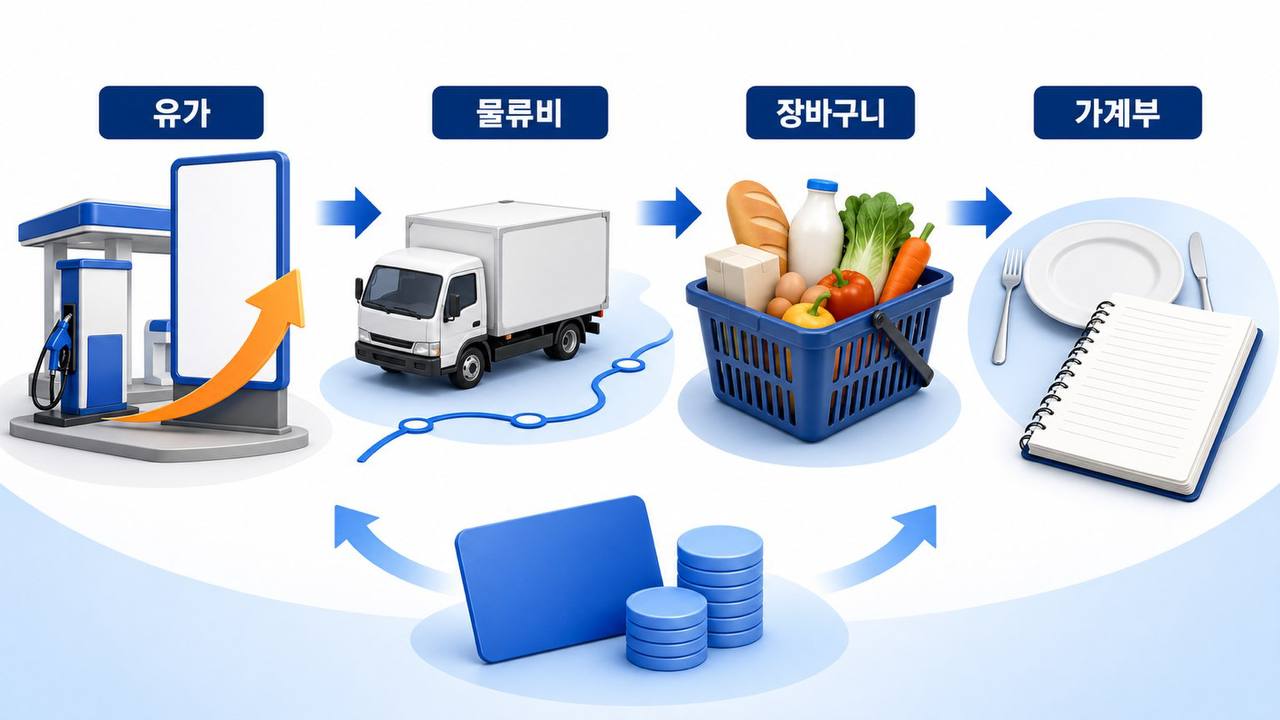
The High Oil Price Relief Payment matters because oil prices move through the economy in several stages. Higher fuel prices raise transport costs. Higher transport costs can affect food distribution, delivery fees, restaurant costs, and daily goods. The household may feel the impact at a grocery store or restaurant before it fully understands the oil-price shock.
For South Korea, the issue is especially sensitive because energy imports, exchange rates, logistics networks, and food prices are closely connected. A relief payment can reduce part of the short-term burden, but it does not remove the underlying pressure from global oil prices or exchange-rate movements.
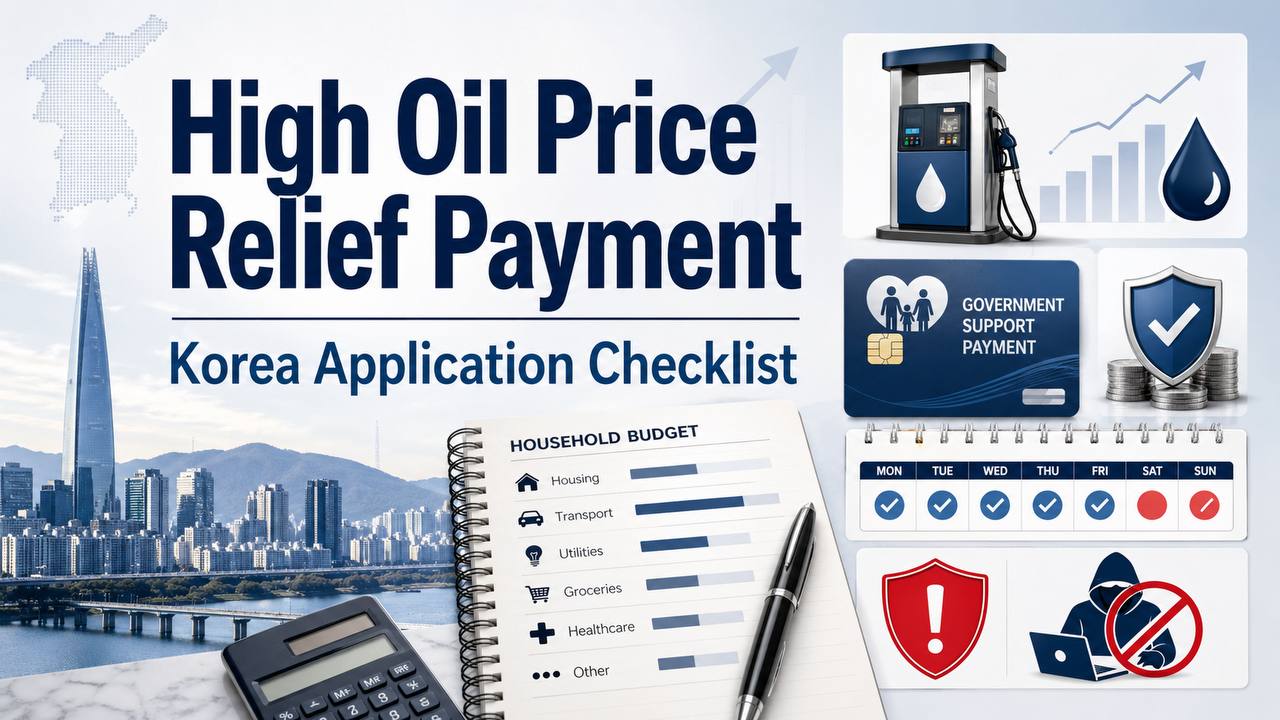
Checklist before applying
- Check whether you are in the first-round eligible group.
- Confirm the last digit of your birth year for the weekday rule.
- Choose online or offline application.
- Select a payment method: credit card, debit card, prepaid card, or local gift certificate.
- Check which merchants are available in your area.
- Plan to use the payment by August 31, 2026.
- Avoid cash-conversion offers, proxy-application messages, and suspicious links.
Common mistakes that can delay the application
One common mistake is applying on the wrong weekday during the first week. Another is assuming that all households are included in the first round. A third mistake is choosing a payment method without checking whether nearby stores accept it.
Applicants should also avoid entering personal information through a link in a text message. Even if the message looks urgent, the safer route is to visit the official website directly or contact the relevant local office.
When can applicants file an objection?
If an applicant disagrees with the eligibility decision or payment amount, objections can be filed from May 18 to July 17 through the national petition system or local community service centers. A weekday rule based on birth-year digits may also apply during the first week of the objection period.
Some objections that do not involve a change in payment eligibility may be accepted during the first application period. If the case is unclear, applicants should contact the dedicated support call center or their local government office before filing.
Final summary: High Oil Price Relief Payment checklist
The first week of the High Oil Price Relief Payment is mainly about checking eligibility, application dates, payment method, merchant restrictions, and fraud risks. The first round is focused on vulnerable groups, and the weekday rule applies during the first application week.
Summary
High Oil Price Relief Payment applications in South Korea began on April 27, 2026. The first round targets basic livelihood security recipients, near-poverty groups, and single-parent family support recipients. A birth-year weekday rule applies during the first week, and the payment must be used by August 31. Applicants should avoid card-cashout schemes, cash-conversion offers, and unofficial application links.
High Oil Price Relief Payment applications in South Korea began on April 27, 2026. The first round targets basic livelihood security recipients, near-poverty groups, and single-parent family support recipients. A birth-year weekday rule applies during the first week, and the payment must be used by August 31. Applicants should avoid card-cashout schemes, cash-conversion offers, and unofficial application links.
FAQ
Who can apply for the High Oil Price Relief Payment first round?
The first round is mainly for basic livelihood security recipients, near-poverty groups, and single-parent family support recipients.
How does the High Oil Price Relief Payment weekday rule work?
During the first week, applications are divided by the last digit of the applicant’s birth year. The restriction is scheduled to be lifted from May 1.
Where can the High Oil Price Relief Payment be used?
Usage depends on the payment method. It is generally accepted at eligible small businesses and local gift-certificate merchants, while some sectors are restricted.
Is it safe to convert the High Oil Price Relief Payment into cash?
No. Cash-conversion offers, discounted resale, fake transactions, and card-cashout schemes can lead to financial damage and legal risk.