Jeonse Rent Conversion: 5 Checks Korean Tenants Should Make Before Signing
핵심 요약
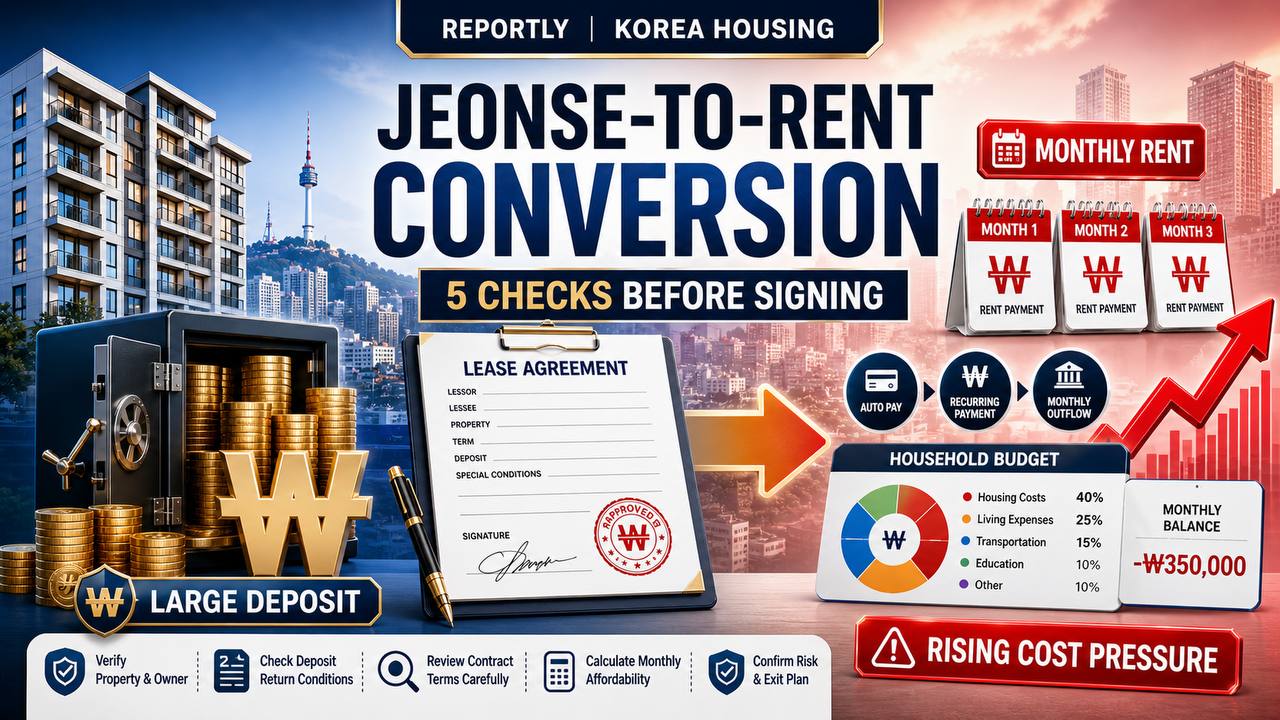
Jeonse Rent Conversion is becoming a bigger issue for Korean tenants. Here are five checks on rent conversion rates, loan interest, fees, deposits and renewal terms.
검증 정보
- 데이터 기준일 2026. 05. 06 작성 기준
- 최종 업데이트 2026. 05. 06
- 참고 기준 본문의 공식 자료, 공개 통계, 서비스 안내 기준
- 면책 고지 정보 제공 목적이며 금융·의료·법률 판단은 개인 상황에 따라 달라질 수 있습니다.
Jeonse Rent Conversion: quick answer
Jeonse Rent Conversion means a Korean tenant lowers the lump-sum jeonse deposit and pays more monthly rent instead. It can reduce the upfront cash burden, but it is not automatically cheaper. Tenants should compare the implied rent conversion rate with jeonse loan interest, maintenance fees, deposit safety and renewal conditions before signing.
Jeonse Rent Conversion is becoming more important as Korea’s rental market faces higher jeonse prices, heavier loan burdens and a growing preference for monthly rent. For overseas readers, jeonse is Korea’s distinctive lump-sum deposit lease system: instead of paying large monthly rent, tenants traditionally provide a large refundable deposit to the landlord.
When jeonse deposits rise or loans become harder to manage, tenants may shift to a hybrid contract often called wolse or ban-jeonse, where the deposit is reduced and monthly rent is added. The key question is not whether the deposit becomes smaller, but whether the tenant’s total monthly housing cost becomes manageable.
Why Jeonse Rent Conversion matters now
Jeonse Rent Conversion matters because it sits at the intersection of housing prices, loan rates and household cash flow. When jeonse prices rise, tenants need more deposit money. If jeonse loans are expensive or limited, reducing the deposit and paying monthly rent can look like the only practical option.
Landlords may also prefer monthly income when interest rates are high or when they want to reduce the burden of returning a very large deposit later. This can reduce the supply of pure jeonse listings and push more households toward monthly or semi-monthly rental contracts.
Jeonse Rent Conversion direct answer: is it cheaper?
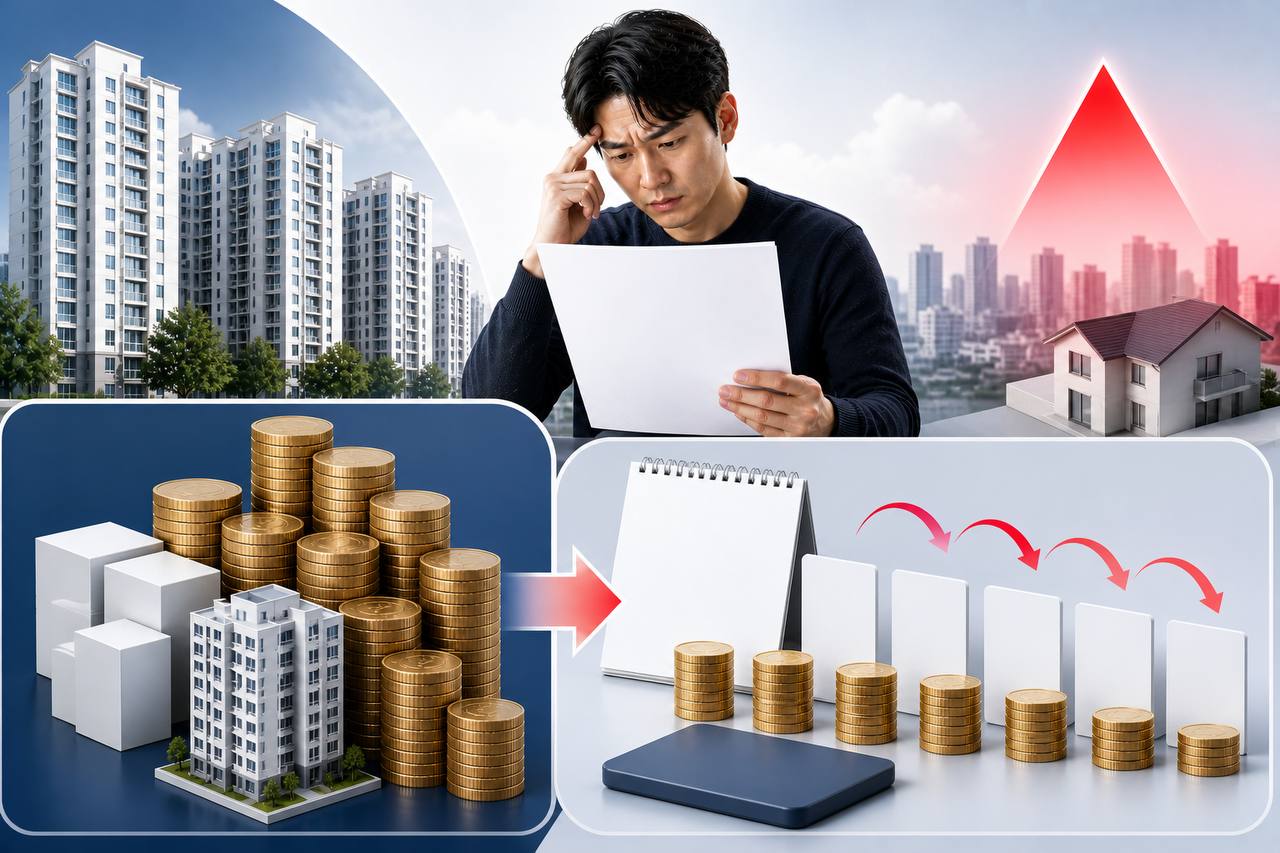
Jeonse Rent Conversion is cheaper only when the additional monthly rent is lower than the financing cost of the deposit being reduced. For example, if a tenant lowers the deposit by KRW 100 million and pays KRW 500,000 more per month, the annual rent increase is KRW 6 million. That is equivalent to a 6% yearly cost on the reduced deposit.
If the tenant could borrow that KRW 100 million at a lower effective rate, keeping a larger jeonse deposit may be cheaper. But if loan access is limited, interest is high, or deposit safety is uncertain, conversion may still be a realistic choice.
Jeonse Rent Conversion: five checks before signing
1. Calculate the rent conversion rate first
The rent conversion rate shows how expensive the monthly rent is compared with the deposit being reduced.
Rent conversion rate = monthly rent increase × 12 ÷ reduced deposit × 100
If the deposit falls by KRW 50 million and monthly rent rises by KRW 300,000, the annual rent increase is KRW 3.6 million. The implied conversion rate is 7.2%.

2. Compare rent with jeonse loan interest
Tenants should compare the conversion rate with their actual jeonse loan interest rate, guarantee fees, refinancing costs and any need for additional credit loans. A contract that looks lighter upfront can become more expensive every month.
3. Add maintenance fees to the monthly housing cost
In Korea, advertised rent may not include maintenance fees, utilities, parking or option charges. A KRW 700,000 monthly rent with KRW 200,000 in management fees is a KRW 900,000 fixed monthly housing burden.

4. Check deposit safety even for monthly-rent contracts
Lowering the deposit may reduce risk, but it does not remove it. Tenants should check the property registry, senior mortgages, existing tenant deposits, tax arrears where applicable, move-in registration, fixed-date registration and whether deposit guarantee insurance is available.

5. Review renewal terms and future rent changes
Tenants should not only check today’s rent. They should confirm the lease term, renewal conditions, rent payment date, late-payment rules, repair responsibility and what exactly is included in maintenance fees. Verbal promises should be written into the contract.
When Jeonse Rent Conversion can hurt tenants
Jeonse Rent Conversion can hurt tenants when the implied conversion rate is much higher than loan interest, when maintenance fees are excessive, or when deposit safety is unclear. In these cases, a smaller deposit can hide a larger long-term housing burden.
When Jeonse Rent Conversion can be realistic
Jeonse Rent Conversion can be realistic when a tenant cannot raise the additional deposit, when debt-service rules make more borrowing difficult, or when reducing the deposit improves risk management. Some households may prefer predictable monthly payments to a larger risky deposit, but the numbers still need to be checked.
Why this matters to Korean households
For Korean households, rent structure is not a minor contract detail. Jeonse deposits can equal several years of income, and a shift toward monthly rent changes household budgets immediately. It can also affect decisions about marriage, moving, saving and whether to buy a home.
Official sources to check for Jeonse Rent Conversion
Before making a decision, tenants should compare listings with public data and official guidance.
- Ministry of Land, Infrastructure and Transport: housing and rental policy information
- MOLIT Real Transaction Price Disclosure System: nearby jeonse and monthly-rent transaction trends
- Korea Housing and Urban Guarantee Corporation: deposit guarantee information
Related reading on Reportly
- Korean original: 전세난 월세 전환, 세입자가 계약 전 계산해야 할 5가지
- BOK Rate Hike: What It Could Mean for Loans, Jeonse and Home Prices
- Household Debt Increase: Why Credit Loans Are Rising Again in Korea
Conclusion: judge Jeonse Rent Conversion by total housing cost
Jeonse Rent Conversion should be judged by total housing cost, not by the lower deposit alone. Tenants should calculate the rent conversion rate, compare loan costs, add maintenance fees, check deposit safety and review renewal terms before signing.
This article is for general information only and is not personalized financial, legal or real-estate advice.
FAQ
What is Jeonse Rent Conversion?
Jeonse Rent Conversion is a shift from a large lump-sum jeonse deposit to a lower deposit plus higher monthly rent.
Is Jeonse Rent Conversion cheaper than jeonse?
Not always. It is cheaper only if the added monthly rent is lower than the effective financing cost of the reduced deposit.
How do tenants calculate a Jeonse Rent Conversion rate?
Multiply the monthly rent increase by 12, divide it by the reduced deposit, and multiply by 100.
Do monthly-rent contracts still need deposit safety checks?
Yes. If a deposit remains, tenants should still check registry risks and guarantee options.